
Kwila decking
Kwila Decking on Auckland's North Shore
Kwila is the hardwood most North Shore homeowners picture when they think of a timber deck — deep reddish-brown, dense underfoot and warm in a way manufactured boards never quite match. A lot of the decks in our gallery are kwila, so there is plenty of real work to look through rather than brochure photos.
It is a good board, but it is not maintenance free, and it behaves in ways worth understanding before you commit.
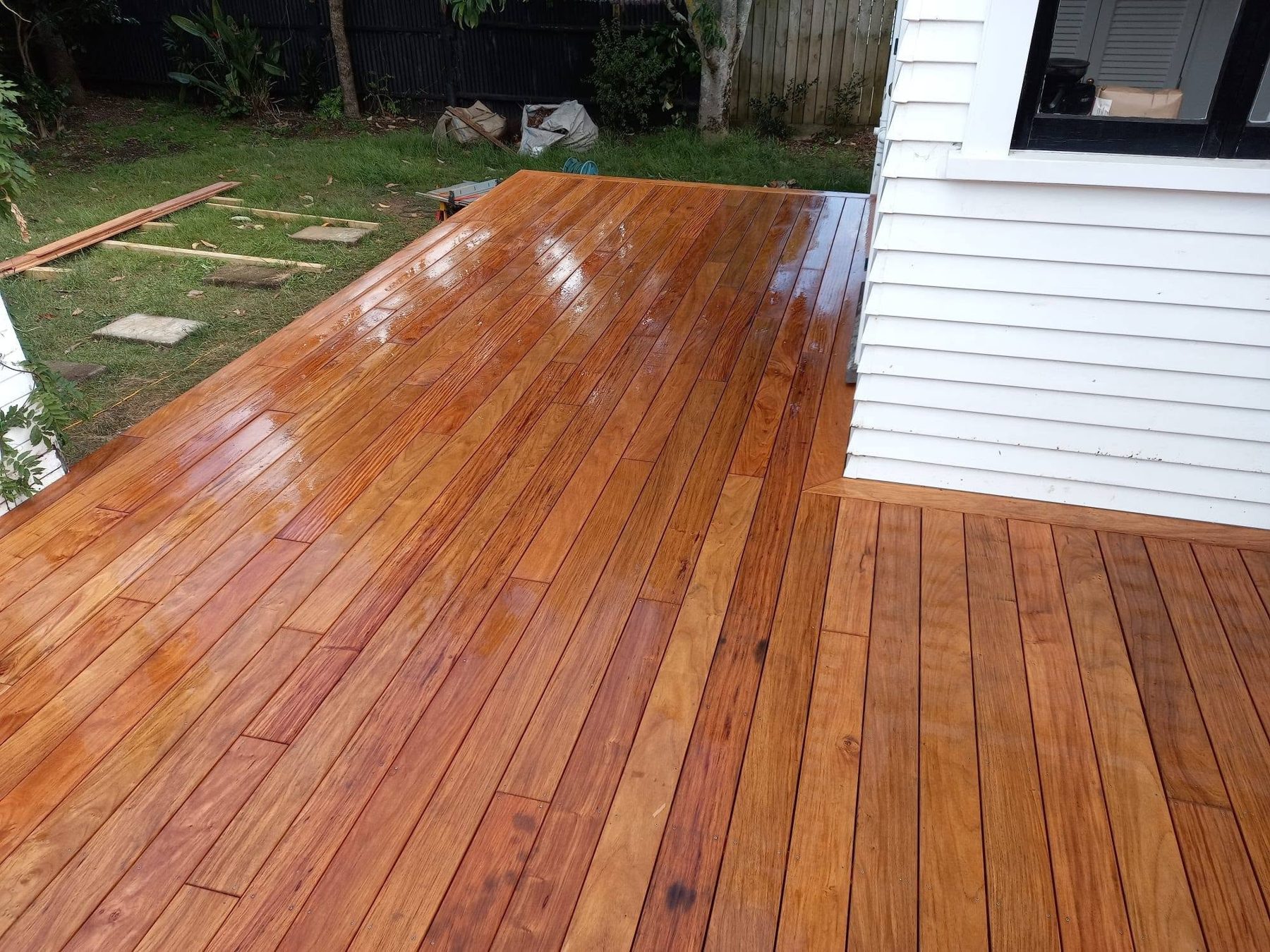
Why kwila is used for decking
Kwila is a dense tropical hardwood. That density is what makes it hard-wearing underfoot and stable once it is down, and it is why it copes with Auckland's mix of hard sun and wet winters better than most softwoods.
Appearance and how it weathers
New kwila is rich and dark. Left completely bare, it gradually silvers off to a soft grey — some people love that look and leave it. Oiled, it keeps the deep brown tone, and a wash and re-oil brings the colour back when it starts to fade.
There is no single right answer here. What matters is deciding early, because the finish affects how often you will be on your knees with a brush.
Tannin bleed on new kwila
New kwila leaches tannins in the first rains, and that run-off can stain paving, plaster and concrete below the deck. It settles down after a few good washes, but it is worth knowing so nobody is caught out — and worth planning for where a new deck sits above pale paving or a rendered wall.
Installation: the parts that matter
A kwila deck is only as good as what is underneath it. The substructure is set out with the board manufacturer's spans in mind, packed and levelled properly, and built with treated framing rated for its exposure.
- —Consistent gaps between boards so water drains and the deck breathes
- —Stainless or coated fixings, set below the surface for a bare-foot finish
- —Pre-drilling near board ends so the hardwood does not split
- —Picture-framed borders so every cut end lands on a clean line
- —Boards set out to keep the joins staggered and the lines straight
Kwila around pools and entertaining areas
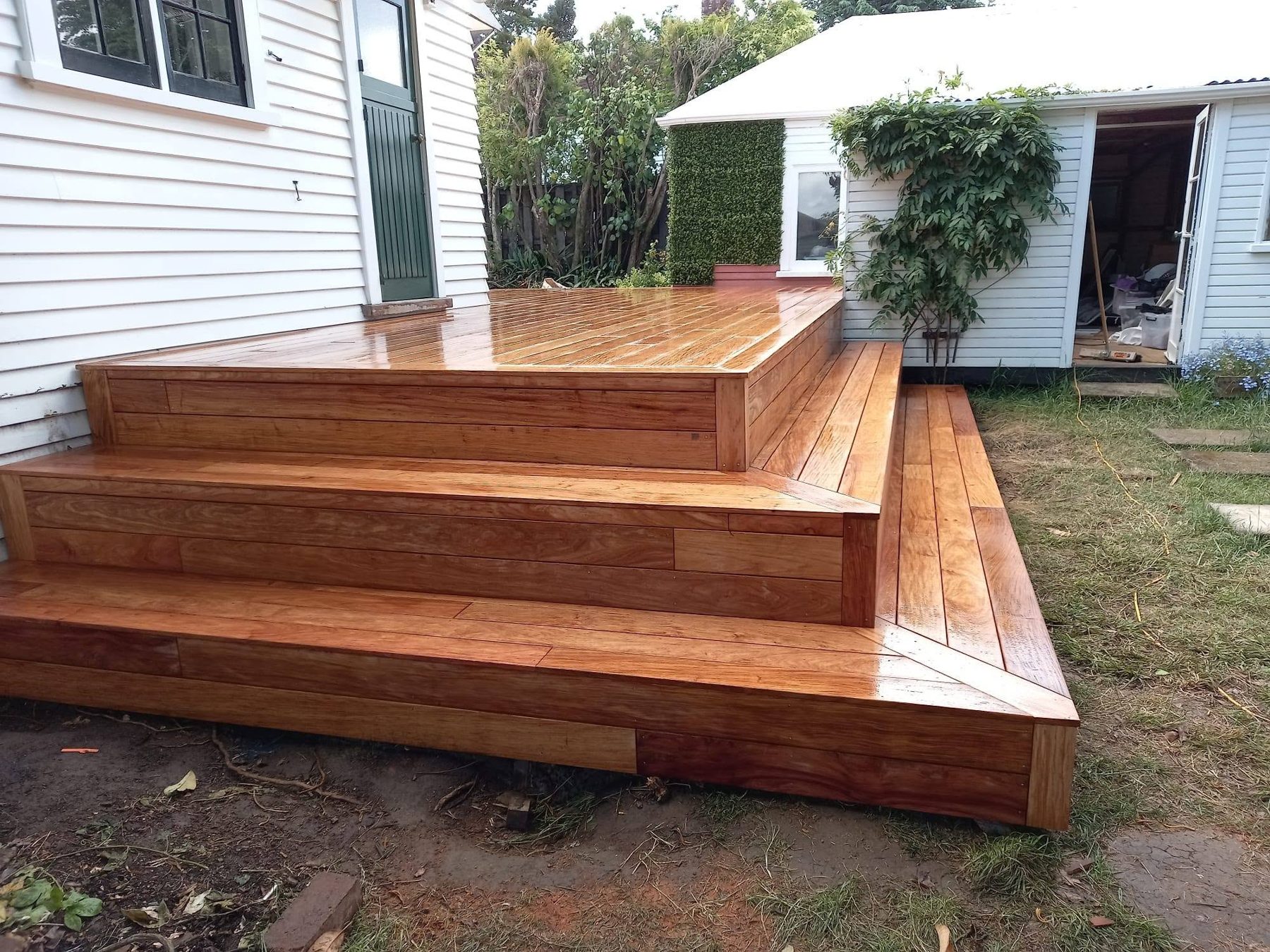
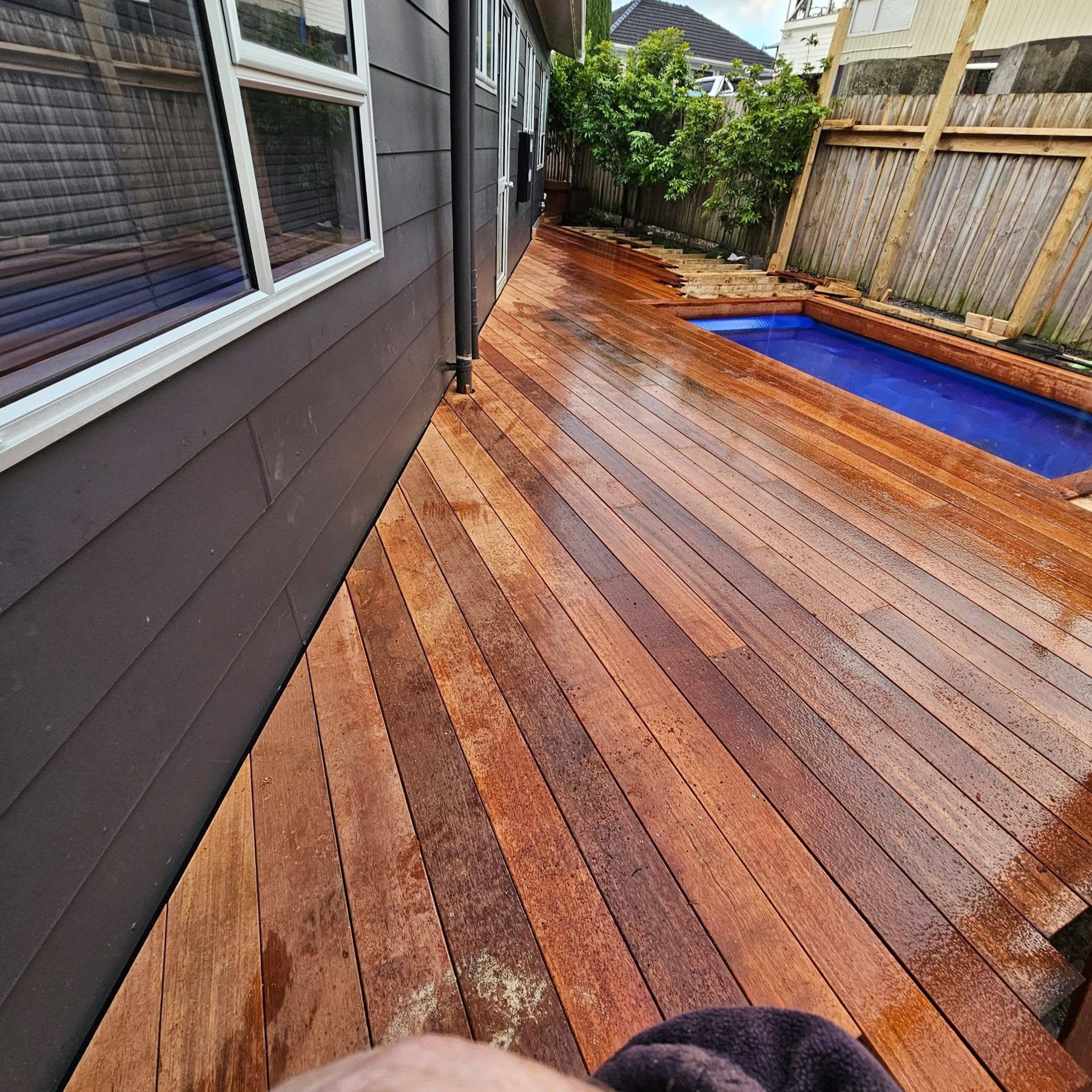
Kwila makes a good pool surround — it is dense, it takes traffic, and it looks the part next to water. Around pools the finished height has to land exactly on the coping, and the framing has to carry foot traffic right to the edge. Kwila also suits entertaining decks where built-in bench seating and wide steps are clad in the same board so it all reads as one piece.
Kwila vs treated pine
Pine costs less and is a perfectly reasonable deck when it is built well. Kwila costs more, is harder wearing, and holds a finish that looks considerably richer. If the deck is the main outdoor space at the back of the house, kwila usually earns its keep. If it is a service platform or a tight budget, pine makes sense.
Kwila vs composite
Composite skips the oiling and holds its colour, but it is a manufactured board and it looks like one. Kwila needs upkeep and rewards it. Neither is universally better — it comes down to how much maintenance you actually want to do and what you want the deck to look like in ten years.
Who kwila suits
Kwila suits homeowners who want a real timber deck, like the look of natural hardwood and do not mind a wash and re-oil when the colour starts to go. If you want to build it and never touch it again, composite is the more honest recommendation.
Related projects
- Kwila deck wrapped around a plunge pool
- Wide-step kwila deck and built-in bench
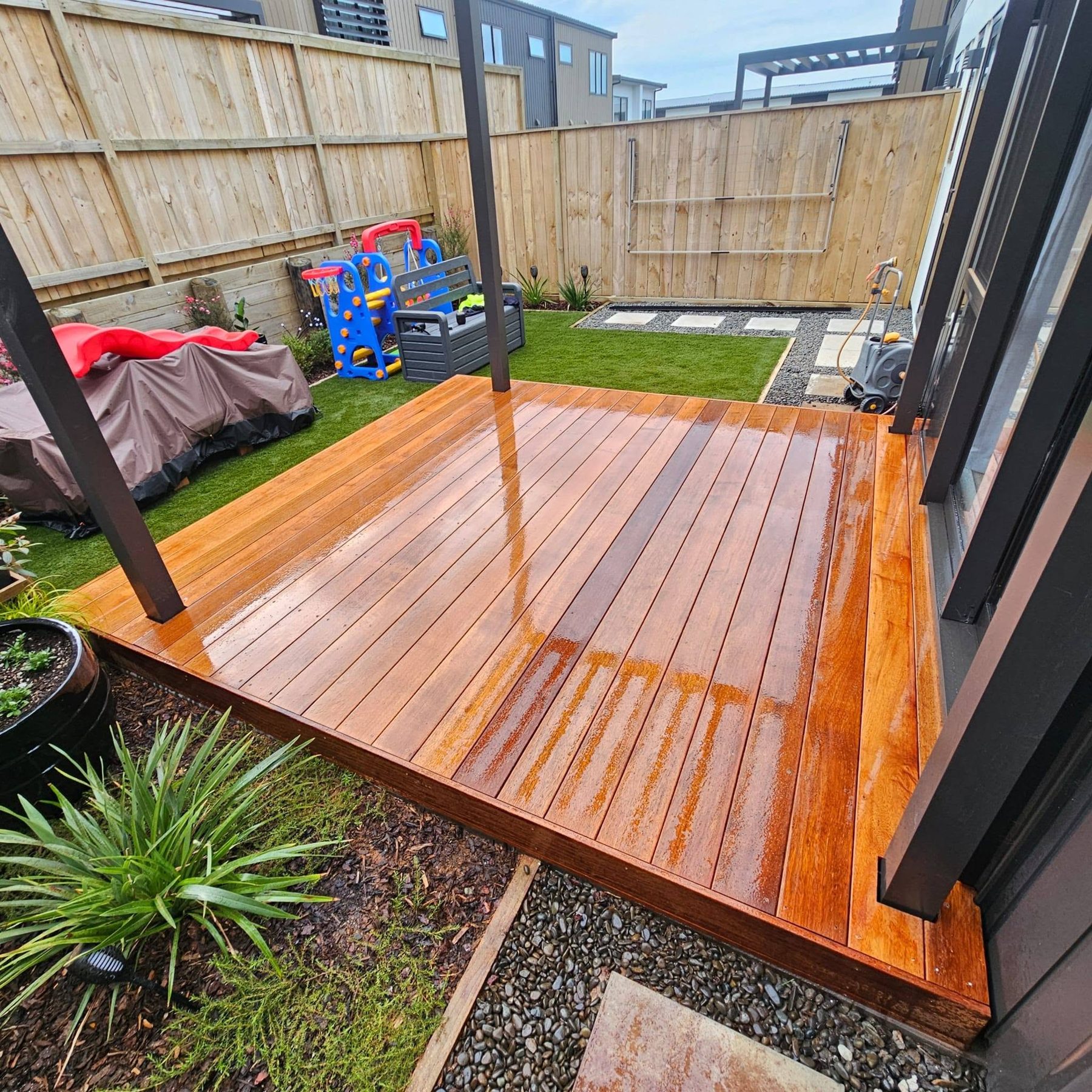
- Kwila deck built under an existing louvre roof
- Elevated kwila deck, balustrade and garden walkway
Common questions
- Is kwila good for decking?
- It is one of the most popular hardwood decking boards in New Zealand because it is dense, hard-wearing and looks good. It does need oiling if you want to keep the colour.
- Does kwila need to be oiled?
- Only if you want to keep the brown tone. Left bare it weathers to a silver-grey without losing its structural performance. Most owners who oil do it once a year, or when the colour starts to look tired.
- Does new kwila bleed colour?
- Yes. New kwila releases tannins in the first rains, which can stain paving or plaster below. It eases off after the deck has been through a few good washes.
- How long does kwila decking last?
- That depends on the substructure, the exposure and the upkeep, so we will not put a number on it. What we can say is that the framing and fixings underneath usually decide the lifespan long before the kwila boards do.
Thinking about a kwila deck?
Request a free quote and we will come out, measure up and talk through whether kwila is the right board for your place.