
Kwila vs Composite Decking: Which Is Better for a North Shore Home?
This is the question we get asked more than any other. There is no single right answer, and anyone who tells you composite is simply better than timber is selling boards rather than giving advice.
What follows is how the two actually compare on the things that matter once the deck is built and you are living with it.
Appearance
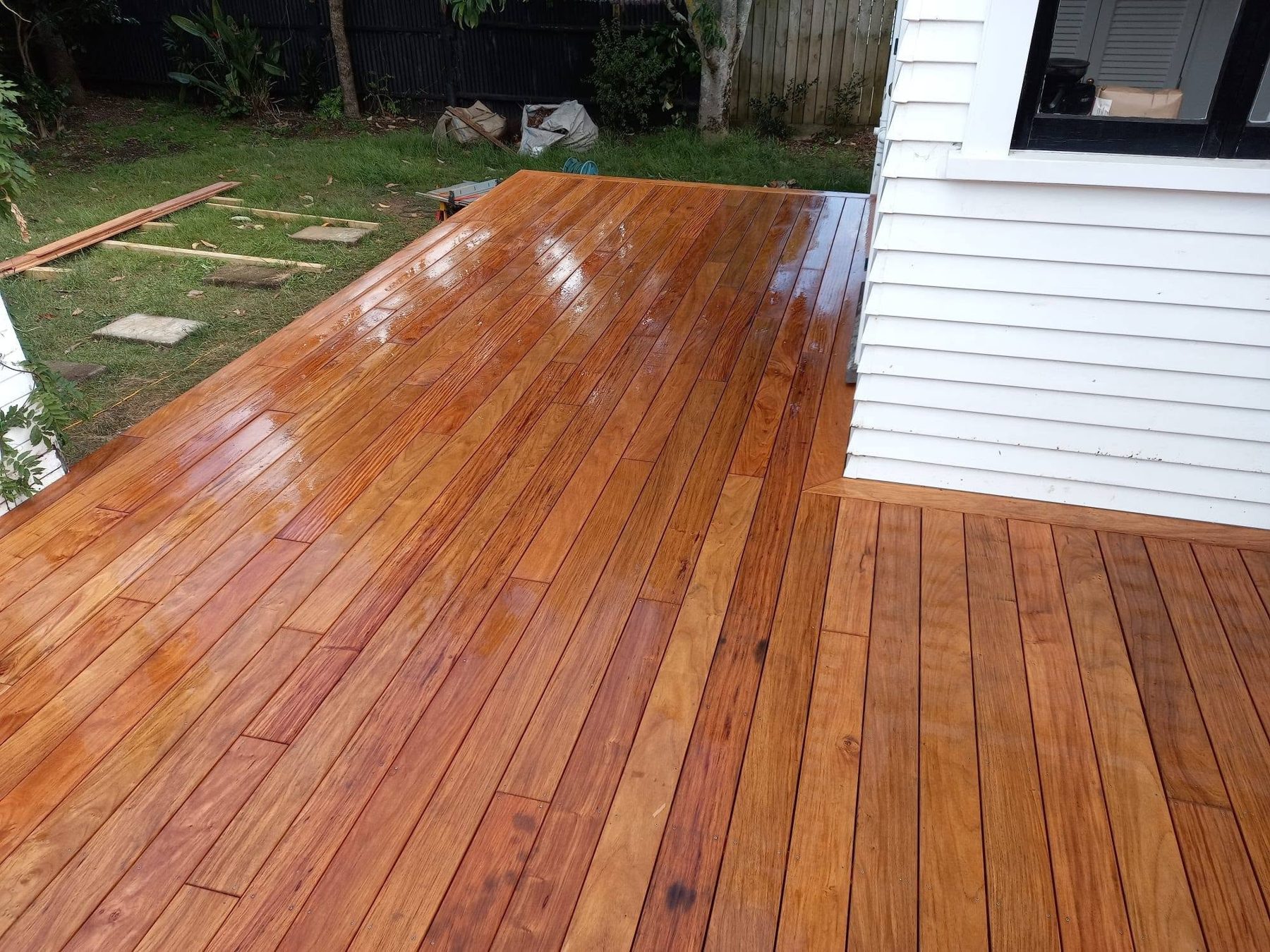
Kwila is real hardwood: variation in colour and grain, and a depth that manufactured boards do not have. Composite has come a long way, with embossed grain and multi-tone colouring, but up close it still reads as a uniform, manufactured surface.
If the look of natural timber is the reason you want a deck, that usually settles it.
Maintenance
This is composite's strongest argument. A wash a couple of times a year and it stays as it is. Kwila wants a clean and a re-oil to hold its brown tone — most owners do that annually, or leave it to weather to grey.
Weathering
Left bare, kwila silvers off to a soft grey. That is a finish in its own right, not a fault, and it is still structurally sound. Composite largely stays where it started, settling a shade in the first months and then holding.
New kwila also bleeds tannins in the first rains, which can stain pale paving below the deck. Worth planning for.
Heat underfoot
Dark composite boards can get hot in full afternoon sun — noticeable if the deck runs around a pool and everyone is barefoot. Timber tends to be more forgiving. Lighter composite colours help.
Pool areas
Around a pool, composite is easy to justify: splash, chlorine and sun all day, and no oiling to schedule around swimming season. Kwila still makes an excellent pool surround if you accept the upkeep — we have built plenty.
Lifespan
We are not going to give you a number for either, because the honest answer is that the substructure and the fixings usually decide how long a deck lasts, not the boards. A cheap frame under premium boards is a deck with a short future.
Cost
Composite costs more to buy than kwila, and kwila costs more than treated pine. Beyond that, prices move around too much for us to publish figures here — but the ranking holds, and your quote will spell out materials so you can see exactly where the money goes.
Who each one suits
- —Kwila: you want a genuine timber deck and do not mind a wash and re-oil
- —Kwila: the deck is the feature at the back of the house
- —Composite: you want to build it and largely forget it
- —Composite: pool surrounds, shaded damp side yards, rentals and holiday homes
- —Either: as long as what is underneath is built properly