
Composite decking
Composite Decking on Auckland's North Shore
Composite decking is the usual answer when someone tells us they do not want to be sanding and oiling every summer. The boards are manufactured, they hold their colour, and upkeep is mostly a wash down.
It is not automatically better than timber. It costs more up front, it looks manufactured up close, and it still relies entirely on a properly built substructure. Here is where it genuinely earns its place.
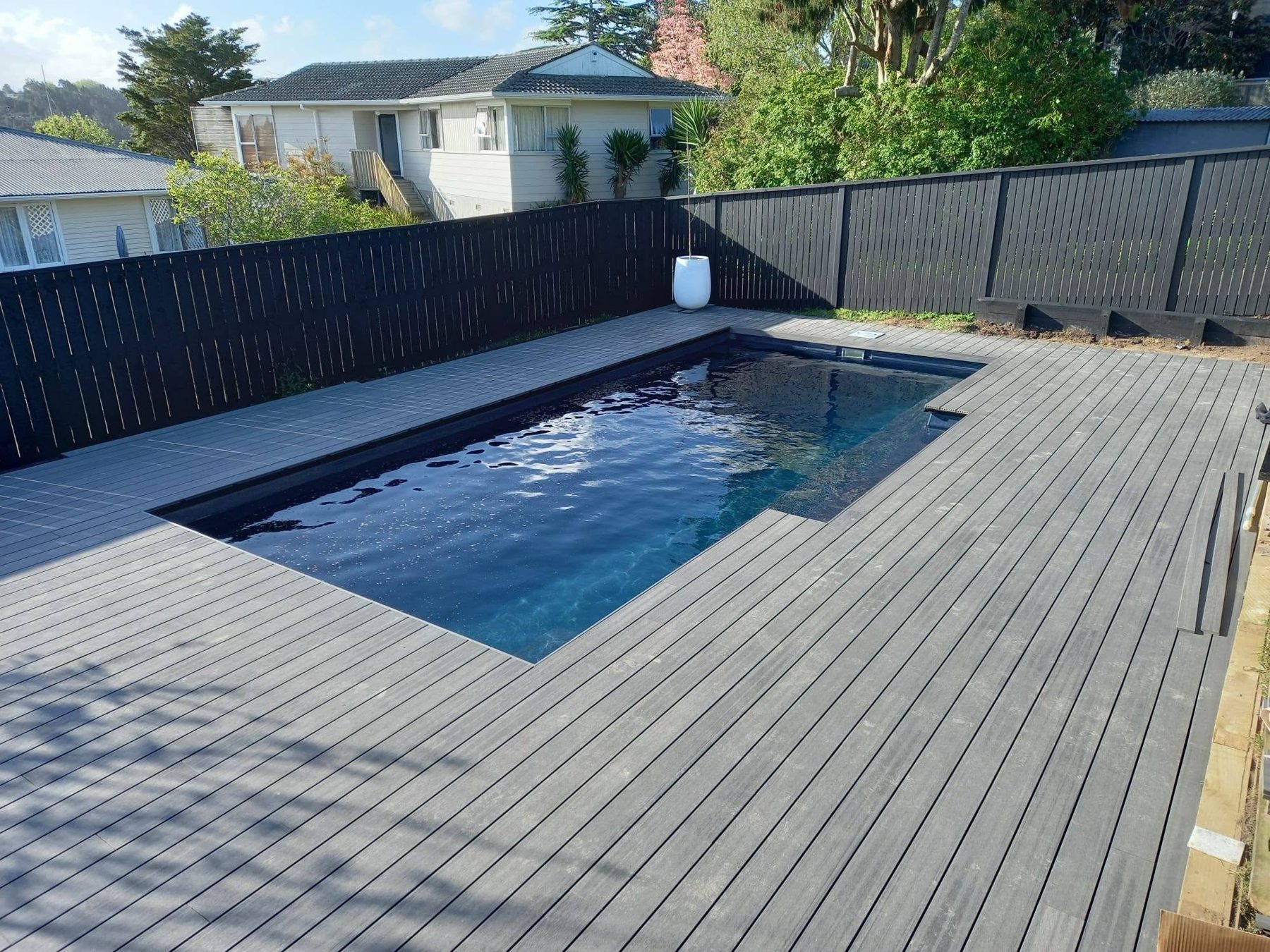
The low-maintenance appeal
No oiling, no staining, no splinters. A wash with water and a stiff brush a couple of times a year keeps most composite decks looking how they did when they went down. For busy households and holiday-home owners who are not there every weekend, that is the whole argument.
Appearance
Modern composite boards have come a long way, with embossed grain and multi-tone colouring. Standing on one it reads as a good, clean, uniform surface — it just does not have the variation of real timber. Worth looking at a sample in daylight before you decide.
Cleaning and weather
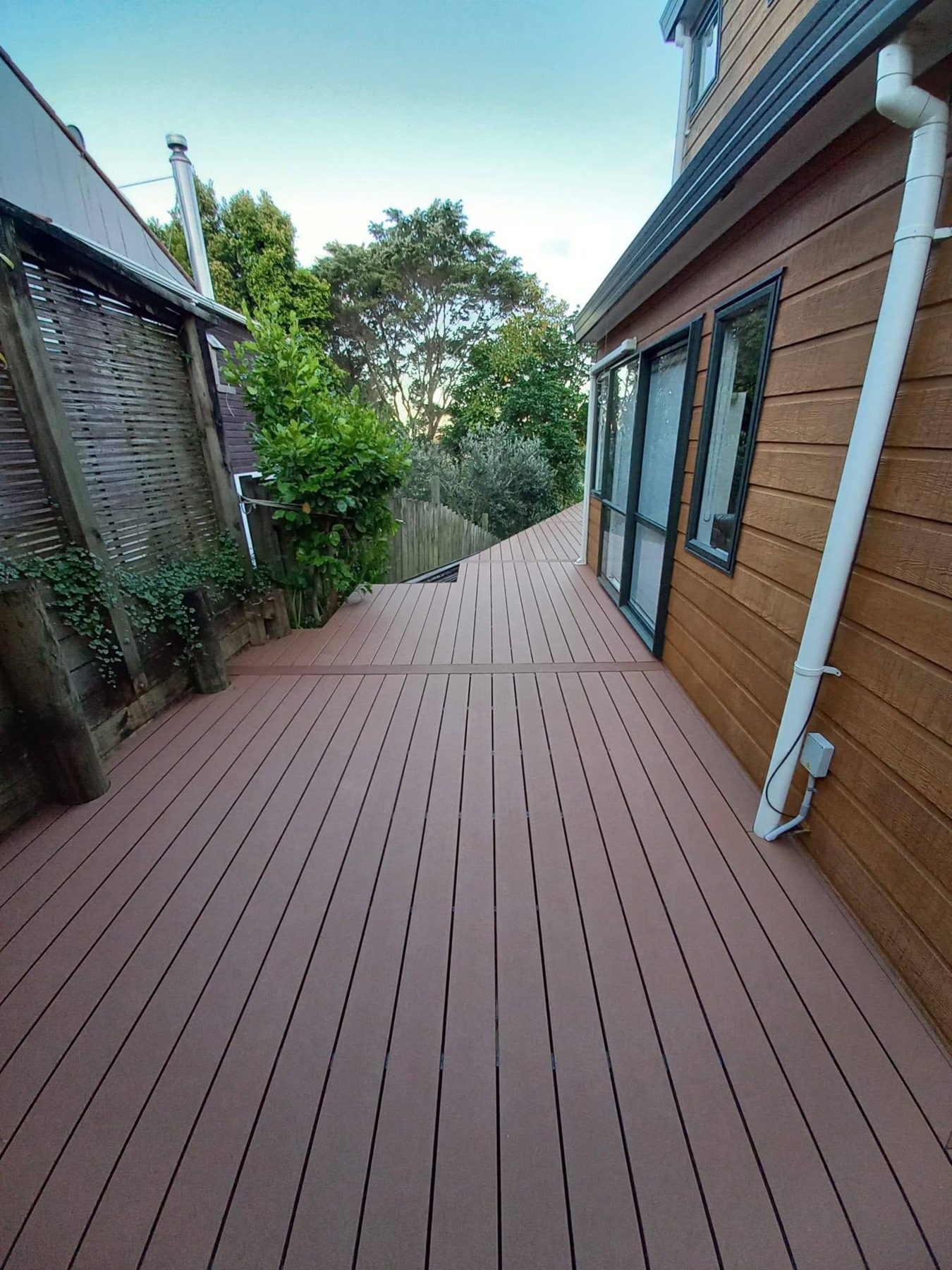
Composite handles rain, salt air and shade well, and does not grow the slippery green film that untreated timber picks up in damp side yards. Dark boards can get hot underfoot in full afternoon sun, which is worth thinking about around a pool.
Composite around pools
Pool surrounds are where composite is easiest to justify: constant splash, chlorine and sun are hard on timber, and nobody wants to oil a deck that is in use all summer. Hidden clip fixings mean there are no screw heads where bare feet land.
Timber vs composite
Timber is cheaper to buy, warmer to look at, and can be re-oiled or sanded back. Composite costs more, then asks less of you. If you like the ritual of bringing a deck back each spring, go timber. If that sounds like a chore you will resent, go composite.
Design and substructure
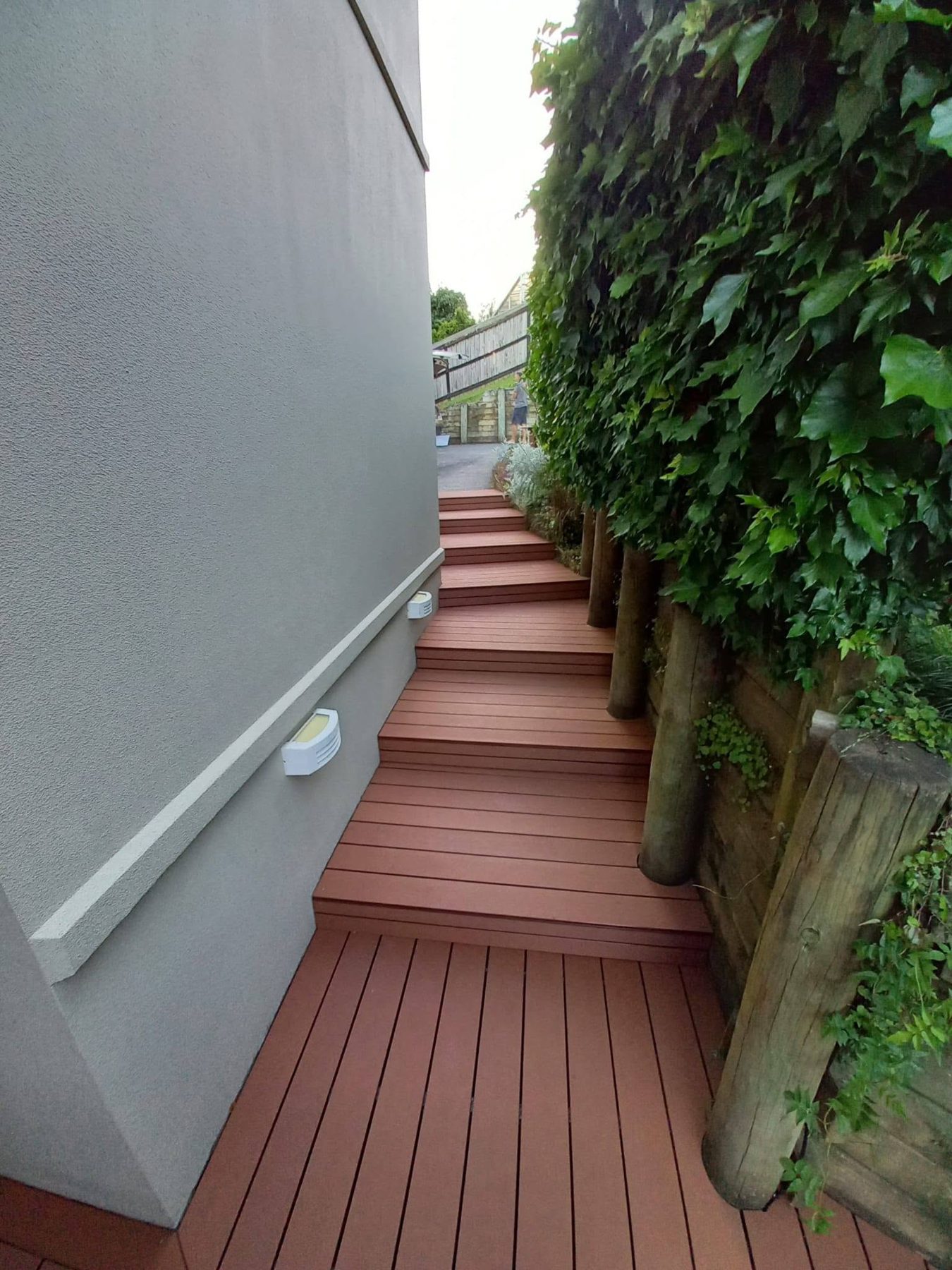
Composite boards have their own span requirements and expansion behaviour, so the joists are set out to suit the board rather than to a standard spacing. Fascia, stair treads and edge details are worked out before the first board goes down so the finished deck does not end up with awkward cuts at the boundary.
- —Joist spacing set to the board manufacturer's spans
- —Hidden clip fixings for a clean surface
- —Gaps allowed for expansion, particularly on long runs
- —Matching fascia and stair treads for a finished edge
Who composite suits
Owners who want the deck to look the same in five years with minimal effort, shaded or damp side yards, pool surrounds, rental and holiday properties, and anyone who has had enough of maintaining a timber deck.
Related projects
Common questions
- Is composite decking worth it?
- If maintenance is your main concern, usually yes. If you want the look and feel of real timber and do not mind the upkeep, timber is still a fair choice. It is a trade-off rather than an upgrade.
- Does composite decking fade?
- Most boards settle slightly in the first months and then stay put. They do not need re-colouring the way an oiled timber deck does.
- Can composite be used around a pool?
- Yes, and it is one of the best uses for it. Hidden fixings keep the surface smooth, and there is no annual oiling to schedule around swimming season.
- Does composite decking still need a timber frame?
- It needs a properly built substructure, whether that is treated timber or an aluminium subframe. The boards are only as good as what carries them.
Considering composite?
Request a free quote and we will talk through boards, budget and whether composite is the right call for your site.