
Does Your Deck Need Repairing or Replacing?
Most deck problems look worse from above than they are, and some look far better than they are. The difference is almost always what is going on under the boards.
Here is how to work out which side of the line your deck is on before you spend anything.
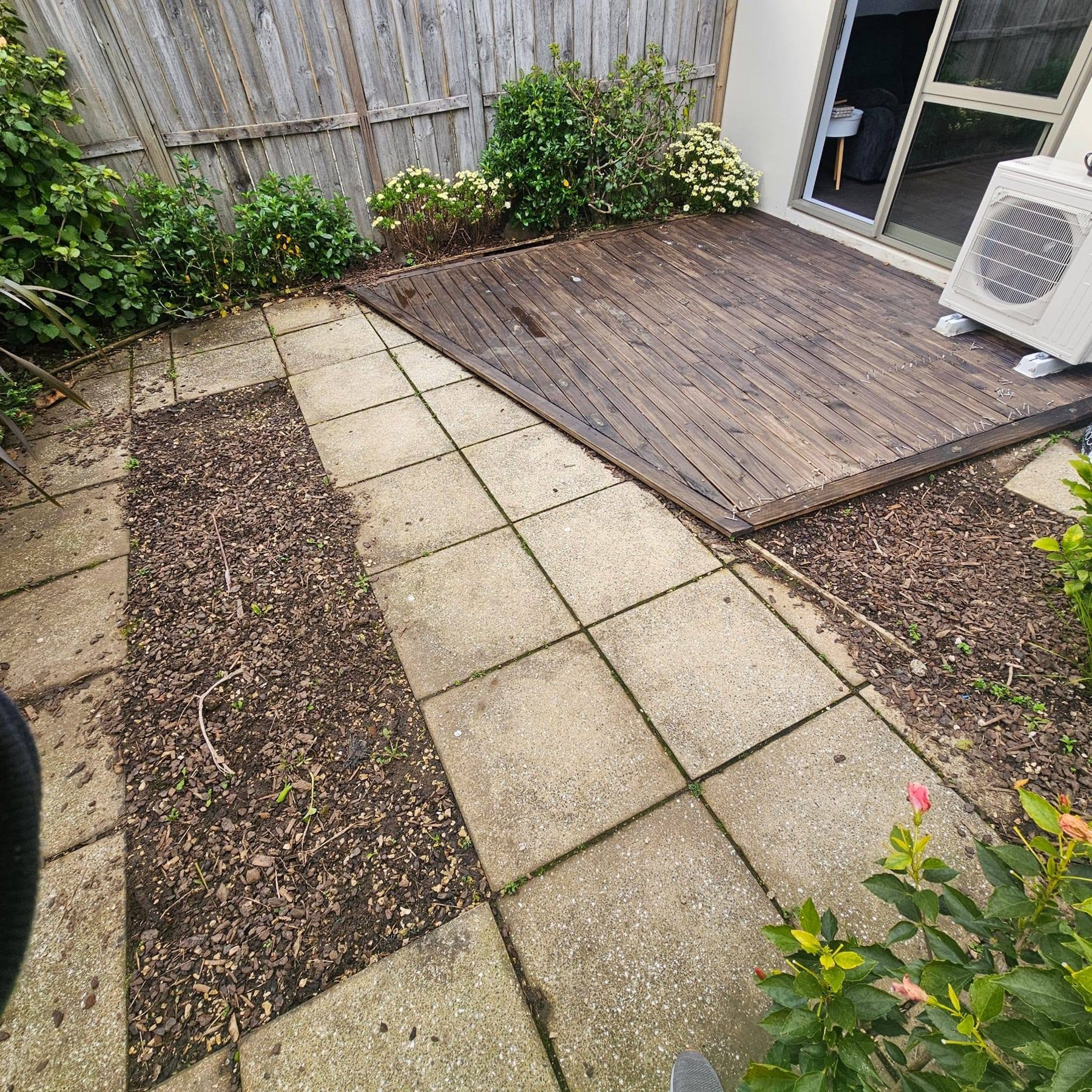
Start with the boards
Grey, splintery, tired-looking boards are often structurally fine. If a screwdriver will not sink into them and they do not flex underfoot, a clean, sand and re-oil can buy a timber deck years. That is the cheapest outcome and worth ruling in first.
Signs of rot in the boards
Soft spots, boards that give when you stand on them, dark staining and mushroom-like growth all mean water has been sitting somewhere it should not. Individual boards can be replaced — but water that rotted a board has usually been sitting on the joist below it too.
Check the joists and bearers
This is the part that decides it. Lift a board or two, or get underneath if there is clearance, and look at where bearers sit on piles and where framing meets the house. Poke the timber. If it is soft at those junctions, the deck is in structural trouble and re-boarding it would be money on top of a problem.
Movement
Bounce, a section that has dropped, or a deck edging away from the cladding are not cosmetic. Causes range from a failed fixing to a pile that has moved to a rotted bearer end. All of it needs eyes on before anyone quotes boards.
Stairs, balustrades and fixings
These are the safety items and they get dealt with first regardless. Uneven risers, bouncy treads, rotten stringers, handrails that flex, corroded nails near the coast — all fixable, all worth doing now rather than after somebody leans on the wrong rail.
When replacing boards makes sense
- —The framing and piles are sound
- —The damage is limited to the deck surface
- —The layout still works for how you use the space
- —You are happy with the footprint and the access
When rebuilding is the smarter spend
- —Rot at bearer ends, pile tops or where framing meets the house
- —Widespread soft boards rather than a few
- —The deck has dropped, twisted or pulled away
- —It was built cheaply — under-sized framing, wrong timber treatment, no drainage gaps
- —You already want to change the size, the steps or the layout
Why the substructure matters most
The frame is the part you cannot go back and fix without lifting everything above it. If you are paying for labour to lift boards anyway, it is usually worth renewing what they sit on at the same time. That is the whole calculation.