
Timber vs Aluminium Deck Framing: Which Is Better?
Treated timber has framed almost every deck in the country, and it will keep doing so. Adjustable aluminium subframes are not a replacement for that — they are the better answer in a specific set of conditions.
Knowing which situation you are in saves money either way.
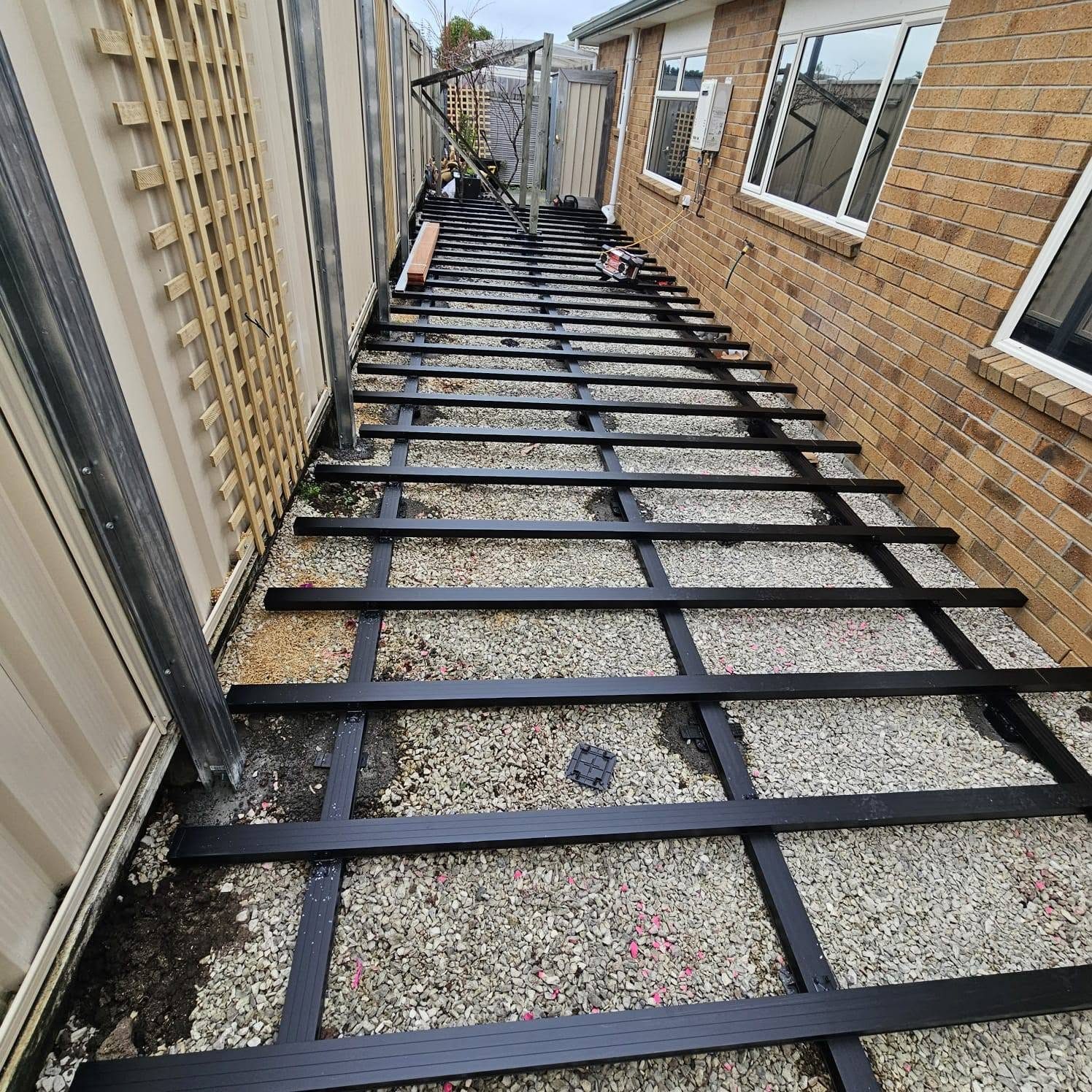
It comes down to the application
A standard deck off the back of the house, a metre or so off the ground with air moving underneath, is timber framing territory. Tight clearances, permanently damp positions and surfaces that must finish at an exact level are where aluminium starts making sense.
Moisture and rot
Treated timber handles moisture well when it can dry out. Where framing sits flat on concrete or in a wet pool environment with nowhere for water to go, aluminium removes rot from the equation entirely.
Ground clearance
If you only have a shallow depth to work within — often the case when matching an indoor floor level — timber joists may simply not fit. Low-profile aluminium systems will.
Building over existing concrete
Where nobody wants to break out an old patio, an aluminium subframe sits over the slab and each support point is adjusted to bring the finished surface level and true.
Outdoor tiles
Tiles want a dead-flat, stable base with fall built in. Adjustable subframes and pedestals do that better than timber joists, and they are how a tiled patio is brought flush with an indoor floor.
Adjustability
Being able to dial in each support is the real advantage. On uneven ground, around an existing pool coping, or up against door thresholds, it turns a fiddly packing job into a precise one.
Cost
Aluminium systems generally cost more in materials than treated timber. Where they save is in the situations where timber would need extra work, extra depth, or would not last. Cost changes over time, so we price the options for your job rather than quoting figures here.
Longevity
A well-built, well-drained timber frame lasts a long time. A timber frame in a position where it stays damp does not. That is the honest comparison — the environment matters more than the material on its own.